
Nobody applies for this job: What it really means to be an unpaid carer — and why you are allowed to put it down for a day.
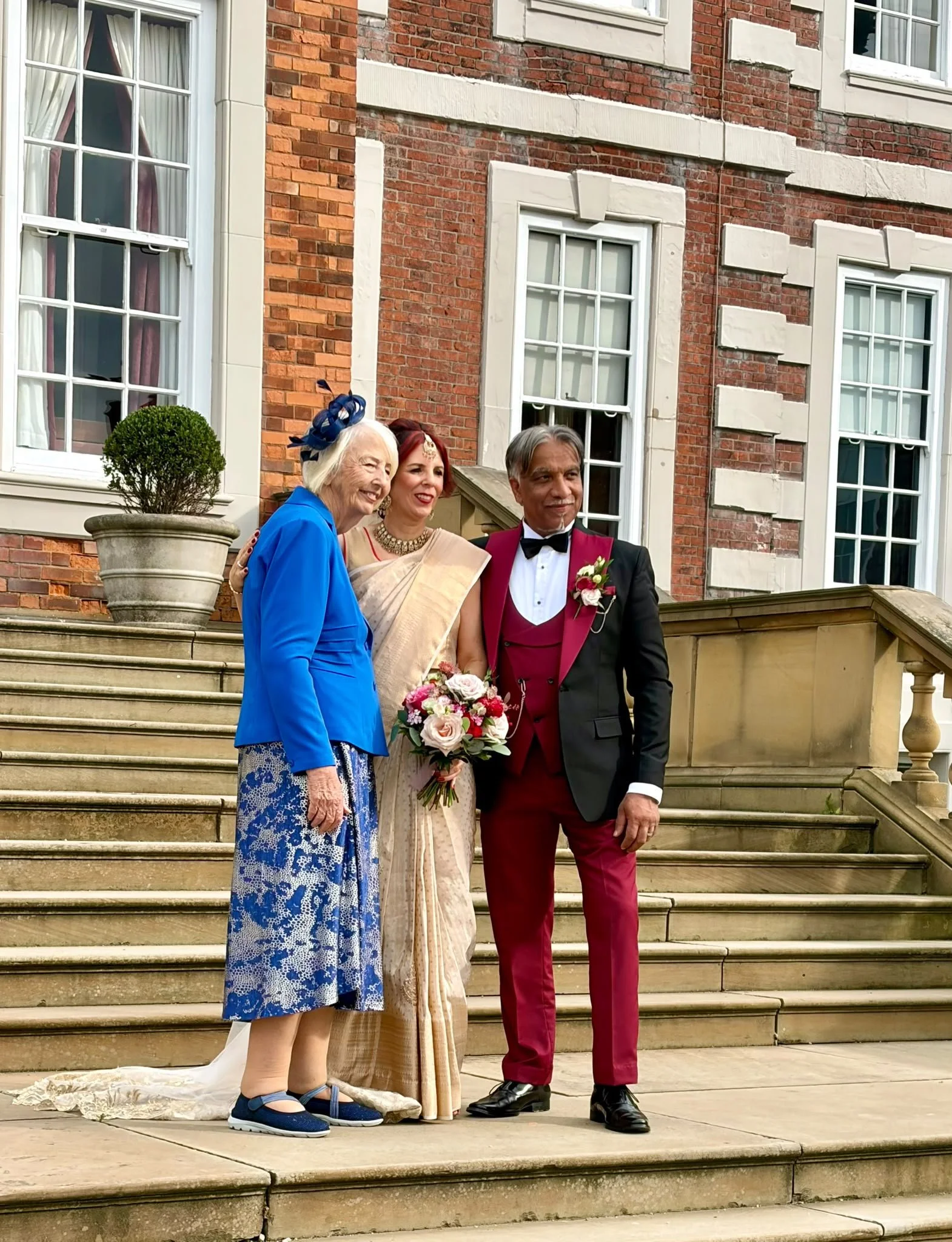
Be the Bride, not the carer.
Nobody applies for this job. There is no interview, no start date, no contract. One day you are a daughter or a son, a partner, a parent, a grandparent — and then something shifts. A diagnosis, a fall, a slow decline nobody voices out loud — and suddenly you are something else as well.
Most people don’t even use the word. They will tell you they are “just helping Mum out a bit.” Meanwhile, they are juggling their own work and family alongside Mum's medication, appointments, grocery shopping, laundry, and the phone calls to the GP that nobody else can make. In the UK, several million people are doing exactly that, and a great many of them would not describe themselves as a carer at all.
I have spent twelve years as a Registered Nurse working alongside those families, and I want to say some things about it plainly — the good and the hard — because it is rarely talked about honestly.
What people get right about it.
Let’s start here, because the difficult parts get all the airtime and that isn’t the whole truth. Caring for someone you love can be one of the most meaningful things you can ever do. There is a closeness in it that ordinary life rarely allows. Grown children learn things about their parents they would never otherwise have known. People tell stories they have never told. Small, daily kindness builds something between two people that is genuinely precious.
Carers become extraordinarily skilled, too, and almost nobody acknowledges it. They can read a face and know something is wrong before any symptoms appears. They know exactly how their person likes their tea, which shoes easiest, which times of day are best, what to say when things get muddled. That is the real expertise, learned the hard way, and no professional arrives with it.
And their is pride in it. Quiet unshowy pride in having kept someone comfortable , safe and at home in their own familiar surroundings. That deserve saying out loud far more often than it is.
What nobody says.
It is also relentless.
Not dramatic - relentless. It is the low hum of always being on. The half-asleep, listening. The phone is always facing up on the table, the volume always on. The way a simple trip out requires a plan, a backup plan, and a calculation about how long you can reasonably be away.
It is also lonely in a specific way. Friends stop inviting you out, not unkindly, but because you have said no the past eleven times they have asked. Conversations become logistics. And the person you would most want to talk about it to - your mum or dad - is often the person you are caring for.
Then there is the guilt, which is the part I find most unfair of all. Guilt for being tired. Guilt for snapping, for the frustration. Guilt for wanting an afternoon that belongs to you. Guilt for the thought that arrives uninvited at three in the morning and is immediately shoved back down. Almost every carer I have ever met carries it, and almost none of them deserve it.
And underneath all of it: grief. Not the grief that comes at the end, but the quiet ongoing kind - for the person as they were, for the relationship you used to have, for the retirement or the years you had imagined going differently.
The other side of it.
Here is the part that gets discussed even less, and it matters just as much.
Being cared for is hard too.
Imagine needing help with the most private parts of your day from your own son. Imagine being the person who used to run the household, and now having to ask permission, in effect, to do anything at all. Imagine feeling - and this is a phrase I hear more than any other - like a burden.
People will go to remarkable lengths to avoid being that. They say they are fine when they are not. They don’t mention pain. They refuse the day out because they can see how much arranging it takes. They stop asking for things.
So you end up with two people, both loving each other, both quietly protecting the other from the truth of how they feel. It is one of the saddest dynamics I see, and it is astonishingly common.
What actually helps.
Not platitudes. Practical things.
Name it. If you are doing this, you are a carer. That word unlocks things - a carers assessment from your local authority, Carers Allowance, support from Carers UK and local carers centres, a carers emergency care. You cannot get help if you are not prepared to identify yourself as a carer who may need help and support themself.
Ask for a carer’s assessment. You are entitled to one in your own right, separately from the person you care for and you need to be honest. It considers your needs, your work, your well being, whether you can carry on as you are.
Accept specific offers, and make vague ones specific. “Let me know if you need anything?” is impossible to answer. “I’ll sit with your mum on Thursday afternoon”, is a gift. If people want to help, give them a job.
Take respite before you are desperate. Respite is not a failure and it is not a luxury - it is most assuredly a necessity - it is what makes caring sustainable over years rather than months. The carers who last are the ones who take breaks early and regularly.
Keep something that is yours. One thing a week that has nothing to do with caring. A class, a walk, a friend, a coffee. It will feel indulgent. It is the opposite.
Talk to your GP about yourself. Not about them. About you. Carers have measurably worse health outcomes than the general population, largely because they don’t book anything for themselves.
Why this is my business.
There is a particular day when all of this comes to a head, it is supposed to be a happy one. A wedding. An anniversary. A big birthday. The whole family in one room - and one person in that room who cannot relax for a second, who feels they need to have eyes in the back of their head, who is always scanning to room because they are still on duty. They watch the door. They check the time. They do the mental arithmetic about toilets and tiredness and medication when everyone else is on their second drink.
And on the other side of the table, the person they are caring for is aware of every bit of it, and wishing they weren’t the reason for it.
That is exactly what I do. I come as a professional carer and companion for the day, so that the guest who needs support gets proper one to one care - discreetly, warmly, with their dignity completely intact - and the family member who usually carries it gets to put it down. For one day. Properly.
Be the Mother of the Bride. Sit down. Have the drink. Make the speech. Dance to the first dance. Be a daughter rather than a carer for a few hours, and let somebody else keep an eye on the time. Be totally present.
One last thing.
If you are the one doing all of this: you are doing a job that several million other people are doing quietly today, and it is far harder than anyone who hasn’t done it understands.
You are allowed to be tired. You are so allowed to want an afternoon that belongs to you. And you are allowed to accept help without it meaning anything at all about how much you love the person you care for.
Nobody applies for this job. But nobody should have to do it entirely alone either.
Planning a family occasion and wondering how it will work?
Send me a message and tell me about the person you care for. I’ll tell you honestly what is possible - and it is far more often yes than families expect. My monthly newsletter, the Extra Chair, is where this sort of writing lands first.
Carolyn - eventcarer.com
